

Author name: roy

Cars passing under Dubai highway toll gate at sunset: UAE fuel and Salik price guide.
Car Lift Guides

UAE Fuel and Salik Price Hikes in 2026: What It’s Costing Drivers

UAE fuel prices have climbed sharply through 2026, with Special 95 petrol rising from AED 2.33 in February to over AED 3.83 by June, one of several UAE fuel and Salik price hikes in 2026 that have made driving noticeably more expensive. On top of that, Dubai added 5% VAT to every Salik toll crossing and to parking charges starting June 1. For anyone driving a daily commute, this isn’t a small shift. It’s a real, monthly cost increase that shows up whether you notice it or not. What Changed in 2026: Fuel, Salik, and Parking These UAE fuel and Salik price hikes in 2026 trace back to global disruption. After the US-Iran conflict broke out in late February 2026, the Strait of Hormuz, a route that once carried a fifth of the world’s oil and gas trade, saw a naval blockade that pushed energy prices up worldwide. The UAE, now setting its own fuel prices independently after exiting OPEC and OPEC+ in May, passed those increases on to drivers. Prices have moved several times since. Here’s the full progression, from February’s baseline through the latest September 2026 rates: Fuel/Toll Type February 2026 June 2026 September 2026 Special 95 AED 2.33 AED 3.83 AED 3.69 Super 98 AED 2.45 AED 3.95 AED 3.80 E-Plus 91 AED 2.26 AED 3.76 AED 3.61 Diesel AED 2.52 AED 4.33 AED 4.30 Salik (Peak) AED 6.00 AED 6.30 AED 6.30 Salik (Off-Peak) AED 4.00 AED 4.20 AED 4.20 Since February 2026, Special 95 is still up roughly 58% year-to-date, even after easing slightly from June’s peak. Salik’s 5% VAT, added on June 1, 2026, is layered on top of the peak/off-peak pricing structure that’s been in place since January 2025; a driver crossing four peak-hour gates daily is paying roughly AED 26.40 extra a month from the VAT alone, on top of the toll cost itself. Parking operator Parkin added the same 5% VAT to all parking charges from that same date, and cash payments at physical parking meters were phased out entirely in favor of digital payment. The takeaway isn’t one fixed number. It’s that the cost of driving yourself has become noticeably less predictable this year than it used to be. What This Actually Costs a Daily Commuter Take a typical Dubai-Abu Dhabi commuter doing the 140km round trip daily. At September 2026 fuel prices, a standard sedan burns through roughly AED 550-850 a month in fuel alone. Add Salik: four peak crossings a day add around AED 26.40 a month just from the VAT portion, before counting the toll itself, and parking VAT if you’re paying for a spot near the office. What looked like a manageable monthly driving budget back in January has shifted more than once this year, and not always in a way that’s easy to plan around. We broke this down in more detail in our Car Lift vs Driving Your Own Car comparison, worth a read if you want the full monthly math, including insurance and maintenance, not just fuel and tolls. Why a Fixed Fare Matters More Now Than Before Here’s the practical problem with driving yourself in a year like this one: your cost isn’t fixed. It moves every time the Fuel Price Committee makes an announcement, and you find out how much more you’re paying after you’ve already spent it. A car lift’s flat fare doesn’t do that. Whether fuel goes up again next month or drops back down, your quoted price stays the same. You’re not the one absorbing a mid-year fuel spike or a new toll VAT that’s priced in before you ever book. How Go Car Lift Keeps Your Cost Predictable Across our routes, Dubai to Abu Dhabi, Dubai to Ras Al Khaimah, and Sharjah to Fujairah the fare you’re quoted is the fare you pay, regardless of what happens to fuel or toll prices that month. That’s the whole point of a flat rate: it doesn’t move just because the Fuel Price Committee makes a new announcement or Salik adjusts its VAT. What that actually means for you: Book once, and the number you agreed to is the number you pay, not something that shifts with the next price announcement. What Might Change Next Fuel prices in the UAE are reviewed and announced monthly, so it’s realistic to expect more movement, in either direction, as global conditions shift. This page will be updated as new prices are announced, so the numbers above reflect where things stood as of the last update, not a permanent baseline. Conclusion Fuel, tolls, and parking have all gotten more expensive and less predictable in the UAE this year. These UAE fuel and Salik price hikes in 2026 aren’t likely to be the last, and there’s no clear sign the pattern stops here.  If you’re tired of recalculating your commute cost every time a new price comes out, a fixed-fare car lift takes that variability off your plate entirely. Message Go Car Lift on WhatsApp to lock in a rate that stays the same no matter what the next fuel announcement brings. FAQs 1. How much have UAE fuel prices increased in 2026?Special 95 petrol rose from AED 2.26 in February 2026 to AED 3.83 by June, before easing to AED 3.69 by September, still more than 60% higher than February’s rate, driven largely by global disruption following the US-Iran conflict. 2. Is there VAT on Salik tolls now?Yes. Dubai’s Salik toll operator added 5% VAT to every toll crossing starting June 1, 2026. As of September, peak crossings cost AED 6.30 and off-peak crossings cost AED 4.20. 3. How much does daily driving cost with the new prices?A typical Dubai-Abu Dhabi commuter can expect AED 550-850 a month in fuel alone at September 2026 prices, plus around AED 26.40 a month in Salik VAT for four daily peak crossings, before parking costs. 4. Does car lift pricing change if fuel prices go up?No. A car lift’s fare is fixed at booking and doesn’t

Professionals boarding van for commute showing benefits of monthly car lift service.
Car Lift Guides

Benefits of a Monthly Car Lift Service in the UAE

A monthly car lift service gives daily commuters one fixed rate, the same driver most days, and no fresh booking every morning. Plans typically run AED 3,000 to AED 8,000 a cycle, depending on your route and whether you go shared or private. That range exists because this is a premium setup, built around consistency, not the lowest price on the road. If you’re commuting four or five days a week, on any route across the UAE, the real question isn’t whether a monthly plan saves money. It’s whether the consistency is worth paying for. Here’s what you’re actually getting. You Pay One Fixed Rate, Not a Rate That Shifts Book day by day, and your price can move with demand, timing, and who’s available that morning. A monthly plan locks your rate before the cycle starts, and it doesn’t change halfway through. That’s the real value here. Not the cheapest number on the market, the most predictable one. No Booking Stress Every Single Morning Daily booking means checking availability, confirming a driver, and hoping someone’s free. A monthly plan skips all of it. Your ride is already arranged for the whole cycle. You get ready, the car shows up, and that’s it. One less decision competing for your attention before work starts. The Same Driver, Most Days This is what separates a premium monthly plan from a cheap one-off booking. You get the same driver for most of the cycle, not someone new each trip. Your driver learns your pickup spot and your timing. We’ve had commuters say this matters more than the price once they’ve actually used it, explaining your building entrance to a stranger every morning gets old fast. Priority When Demand Is High Between 7 and 9 AM, seats fill up fast on busy routes. Monthly plan holders aren’t competing for a last-minute spot during that window, since their seat is already set. On a longer intercity route especially, missing your ride doesn’t mean a short wait. It can mean an expensive last-minute alternative or being late. Less Wear on Your Own Car Skip the daily drive yourself, and your fuel, tolls, and mileage all drop. Tyres last longer. Servicing happens less often. Add that up over a year, and it’s usually more than people expect once it’s actually totalled up. Good for Companies Managing Staff Transport Businesses running this for a team get a transport cost they can budget for, instead of guessing at daily totals. Staff shows up on time more consistently, and HR gets one predictable line item instead of many unpredictable ones. Ask about a group rate if you’re booking for more than one person, it usually works out better than separate individual plans. Peace of Mind for the Whole Cycle There’s a quiet stress that comes with daily transport uncertainty. Will a driver be free? Will the price change today? A monthly plan removes that for the entire cycle in one booking. That’s worth something beyond the number on the invoice. Who Can Benefit from a Monthly Car Lift Plan A monthly plan isn’t built for one type of commuter. It fits anyone doing the same route often enough that a fixed routine actually saves time, not just money. Different reasons, same core benefit: you’re not arranging a new ride every single day. If any of these sound like your routine, a monthly plan is worth checking against what you’re currently paying. Is a Monthly Plan Right for You? It makes sense if you’re commuting four or five days a week and want a fixed cost with a consistent driver. It’s not the right fit if your schedule changes constantly, or you’re only making the trip occasionally; a daily or weekly booking gives more flexibility without paying for days you won’t use. Where to Get a Monthly Car Lift Plan A few providers run monthly car lift plans across Dubai, Abu Dhabi, and the wider UAE. What to check before picking one: is the driver consistent, is the rate actually fixed for the full cycle, and is the company RTA-approved? Go Car Lift runs monthly plans from AED 3,000, with the same driver for most of the cycle and RTA-approved vehicles. Shared and private options are both available, and the rate stays fixed for the full 4-week cycle once confirmed. Ready to Set Up Your Plan? WhatsApp your route and how many days a week you’re commuting, and we’ll confirm a rate that fits your schedule. [Book on WhatsApp] FAQs 1. What’s the benefit of a monthly car lift over daily booking?A fixed rate, the same driver most days, and no booking every morning. One payment covers the whole cycle. 2. How much does a monthly car lift service cost?Shared plans typically run AED 3,000 to AED 4,500 a cycle. Private plans run AED 6,000 to AED 8,000, depending on route and setup. 3. Will I get the same driver every day?Mostly, yes. Occasional changes happen, but most riders keep the same driver for most of the cycle. 4. Is a monthly plan good for companies with staff commuting daily?Yes. It gives a predictable transport cost and tends to improve punctuality compared to ad-hoc daily bookings. 5. Is it worth it if I only travel a few times a month?Not usually. It’s built for commuters doing four or five days a week. Below that, daily or weekly booking is the better fit.

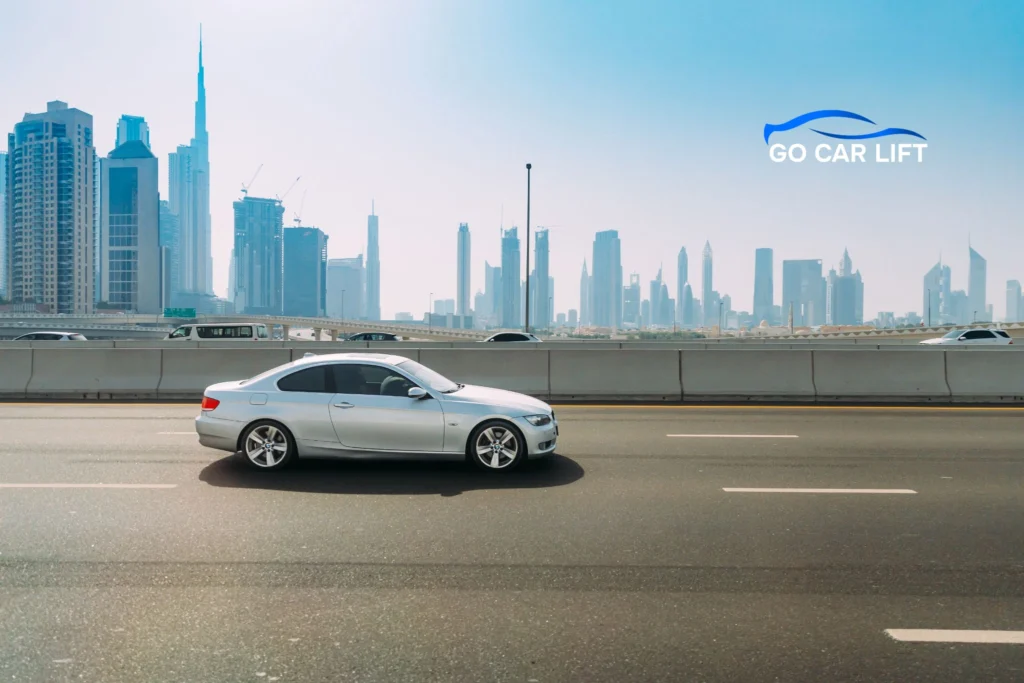
Silver sedan driving on highway with skyline view for Car Lift Services in Dubai.
Car Lift Guides

Reliable Car Lift Services in Dubai: Safe & Trusted for Daily Rides

Getting between Dubai and the rest of the UAE every day shouldn’t mean rebooking a taxi, fighting traffic yourself, or hoping a random ride shows up on time. That’s the gap that car lift services in Dubai actually fill. A car lift is a shared or private ride, arranged in advance, with a driver, a fixed fare car lift arrangement, and a schedule that runs the same way every day, not something you’re negotiating fresh each morning. Commuters, students, and daily office workers use this kind of Dubai car lift service for one simple reason: it beats the unpredictability of a taxi and the hassle of driving yourself, especially on routes travelled five days a week. A daily car lift Dubai commute means the same driver, the same pickup point, and no fresh booking every single morning. This page covers what to actually look for in car lift services in Dubai, how our plans work, where we operate, and how to book. What Actually Makes a Car Lift Service Reliable Not every provider offering a passenger car lift service holds itself to the same standard, so it’s worth knowing what actually separates a properly run one from a rough one before you commit to any regular arrangement. The best way to judge car lift services in Dubai isn’t by marketing language; it’s by whether these basics are actually in place: These aren’t luxury extras. They’re the basics a genuinely dependable service handles as standard. Shared vs Private: Which One Fits You The two main ride types work differently, and picking the right one depends on your budget and how much you value having the car to yourself. A shared car lift in Dubai booking splits the vehicle with other passengers heading the same way. A private car lift Dubai ride means the whole car is yours, with no shared stops. Shared Car Lift Private Car Lift Lower cost More privacy Shared route with other passengers Flexible, personal schedule Good for regular commuters watching the budget Good for individuals or families If privacy and a fully flexible schedule matter more to you, our Private Car Lift service page covers that option in full detail. Daily, Weekly, and Monthly Plans Every one of our car lift services in Dubai runs on the same three tiers, so you pick based on how often you’re actually travelling, not a one-size-fits-all package. Daily Plan Best for occasional trips or a schedule that changes often. You book as you go, with no ongoing commitment. Weekly Plan A good fit for short-term commuting needs, a temporary work assignment, or a few weeks of regular travel, without locking into a full month. Monthly Plan For professionals and students who travel the same route regularly, a monthly car lift service in Dubai provides a more convenient way to manage daily commuting with a consistent schedule and reliable arrangements. Specialised Car Lift Services We Offer Beyond the standard commute, our car lift services in Dubai extend to a few specific needs that a generic ride doesn’t cover well: Areas Covered by Go Car Lift We’re not limited to one city. Here’s where our car lift service dDubainetwork actually reaches, and what each route is built around. Car Lift Ajman to Dubai  A daily commuting solution for passengers travelling between Ajman and Dubai, with the same fixed-fare, GPS-tracked setup used across every route we run. This corridor sees heavy daily traffic from residents working in Dubai while living in Ajman for more affordable housing. Car Lift Sharjah to Dubai One of our busiest corridors, built for Sharjah residents commuting into Dubai for work, with shared and private options depending on your budget. Timing matters most on this route, since it crosses some of the most congested stretches of road in the UAE during peak hours. Car Lift Dubai to Sharjah The same route in reverse, for anyone commuting out of Dubai toward Sharjah, running on the same fixed schedule in either direction. Whether you’re heading home after work or travelling for a family visit, the setup stays consistent. Car Lift Dubai to Al Ain  A car lift service from Dubai to Al Ain is an option for the longer inland route, with daily, weekly, and monthly plans available for regular travellers. This trip runs longer than most of our other routes, so a private option is often worth considering for comfort on the way. Car Lift Ajman to Ras Al Khaimah Connecting the northern Emirates, this route runs on the same driver-verification and tracking standard as our core Dubai-Abu Dhabi service. Fewer providers cover this specific corridor consistently, which makes a dependable fixed schedule especially useful here. Car Lift Sharjah to Abu Dhabi  A longer route covered with the same consistency, useful for anyone commuting the full stretch between the two emirates. Given the distance involved, planning ahead with a weekly or monthly arrangement tends to work out better than booking single trips repeatedly. Car Lift Sharjah to Fujairah A convenient car lift service from Sharjah to Fujairah for passengers travelling between the two Emirates, suitable for regular commuters and travellers who prefer a planned ride over arranging transport each time. With scheduled pickups and reliable travel arrangements, this route helps make longer-distance daily journeys more manageable. Car Lift Dubai to Abu Dhabi A reliable car lift service from Dubai to Abu Dhabi for passengers travelling between the two cities for work, study, or regular commitments. With planned schedules, shared and private travel options, and consistent route arrangements, it helps daily commuters manage the long-distance journey more comfortably. A Premium Offering at Reliable Rates We provide a premium offering at reliable rates, with flexible daily, weekly, and monthly car lift plans designed around different commuting needs. Whether you travel regularly for work, study, or personal commitments, you can choose a plan that matches your route and schedule. Estimated fares usually vary depending on the distance, travel frequency, and whether you choose shared or private travel. For example, daily car lift

ladies car lift Dubai to Abu Dhabi
Guides

How Much Does Ladies Car Lift Dubai to Abu Dhabi Cost?

Planning a ladies car lift Dubai to Abu Dhabi trip? Here’s what it actually costs. A private one-way ride with a standard driver runs AED 170 to 200. A shared monthly plan starts at AED 3,000. If you want a female driver specifically, that costs a bit more, and we’ll explain why below instead of hiding it in fine print. Price is one part of the decision. But if you’re doing this route every day, or even just once at night, price stops being the only thing you care about. A driver who’s late, or a ride with no tracking, ends up costing you more than a few extra dirhams ever could. Why This Route Gets Booked So Often Dubai to Abu Dhabi is one of the busiest intercity routes in the UAE. Thousands of people travel it daily for work, and a good number of them are women who’d rather not figure out a new ride every single morning. So a dedicated car lift service exists for exactly that reason, same driver, same timing, one thing off your plate. Nurses on early shifts. Office staff with a fixed 9-to-5. University students going back and forth between campuses. Airport staff starting before regular traffic even begins. All of them need the same thing: a ride they don’t have to think about twice. What a Ladies Car Lift from Dubai to Abu Dhabi Actually Costs Service Type Price (AED) Private one-way (standard driver) 170–200 Private weekly (standard driver) 1,600 Private monthly (standard driver) 6,000 Shared monthly (standard driver) 3,000 Private one-way (female driver, on request) 200 Private round trip (female driver, on request) 400 Private monthly (female driver, on request) 8,000 Shared monthly (female driver, on request) 4,500 Your final rate depends on your pickup point, your drop-off point, and whether you’re booking daily, weekly, or monthly. Requesting a female driver costs more because it’s arranged specifically for you, not automatic on every car. Fewer female drivers on the road means more coordination to confirm one for your exact time slot. And that’s the honest reason for the difference. It’s not a random markup. Shared vs Private: Which One Fits You Ask yourself this: are you commuting the same route five days a week, or is this a one-off trip? That answer usually decides which one makes sense for you. What’s Included in the Price No hidden add-ons. What you’re quoted on WhatsApp is what you pay when you arrive. Why Safety Matters More Than the Cheapest Price You’ll find cheaper rides out there. But for a daily Dubai to Abu Dhabi commute, most people compare more than just the number on the quote. Driver reliability, punctuality, and knowing your fare before you even get in the car, that’s what actually gets weighed. Every driver on this route is RTA-approved and goes through a background check before they’re hired. Every ride runs on GPS tracking, so you can share your live location with a family member if you want someone to know exactly where you are. And if a female driver matters to you for a specific trip, you can ask for one, it’s built into the booking flow, not a separate product you have to go hunting for. If you’re new to ladies car lift services, you can also learn more about how women can use car lift services in the UAE and what to expect before booking. We’ve had women book this specifically because they were coming off a night shift and didn’t want to wait for a taxi at an hour when options thin out. That’s a real reason people choose this, not a line from a brochure. Why Choose Go Car Lift for Ladies Car Lift Dubai to Abu Dhabi? We’ve run the Dubai to Abu Dhabi route since 2009. That’s 17 years on the same road, with the same standard. That’s why Go Car Lift has become a top choice for ladies travelling Dubai to Abu Dhabi, not a claim, a standard you can check every time you book.  How to Book a Ladies Car Lift Dubai to Abu Dhabi Booking a ride takes a few minutes. Confirming a female driver takes a little longer, since it depends on who’s free at that hour. Common Mistakes People Make When Booking a Car Lift Before booking, check the full car lift Dubai to Abu Dhabi cost and what is included in the fare. Comparing pricing details, ride options, and included services helps you choose a car lift service without unexpected charges later.  Who This Service Is Best For If you’re commuting five or six days a week, monthly private or shared makes more sense than booking daily. If it’s a one-time trip, a family visit, an interview, or a late flight, private one-way covers that without locking you into anything. Are you booking for yourself, or coordinating for a group of colleagues doing the same commute? Either way, the same driver standards apply. Ready to Book? WhatsApp your route, and we’ll confirm your fare and driver in minutes. FAQs 1. How much is a ladies car lift from Dubai to Abu Dhabi?Private rides run AED 170–200 one-way with a standard driver. Requesting a female driver costs more, starting around AED 200 one-way. 2. Is shared or private cheaper for daily commuting?Shared is cheaper. Monthly shared starts at AED 3,000, compared to AED 6,000 for private. 3. Are tolls included in the price?Yes. Fuel and Salik/Darb tolls are included in every quote you get. 4. Can I request a female driver every time?You can ask every time, but it depends on who’s available at that hour. Booking ahead gives you the best chance of confirming one. 5. Is a ladies car lift safe at night?Every driver is RTA-approved and background-checked, and every ride is GPS-tracked, which you can share with family in real time. 6. How do monthly packages work?You pay once for the month and travel daily without booking each trip on its own. 7. Is

Driver helping student into van for School Car Lift Service in Dubai.
Car Lift Guides

Is Your School Car Lift Service in Dubai Actually Safe?

Most parents don’t think much about their school car lift service once it’s set up. The driver shows up, the child gets to school, and life moves on. But there’s often a quiet worry sitting underneath that routine, a sense that something about the arrangement isn’t quite as buttoned-up as it should be, even if nothing’s actually gone wrong yet. This isn’t about panicking over a single missed detail. It’s about knowing which patterns in a school car lift service in Dubai are worth paying attention to, and what to actually do if you recognise a few of them. 7 Warning Signs Your School Car Lift May Need a Closer Look 1. You’ve never actually seen the driver’s ID or licence. 2. There’s no real-time tracking, just a text message after the ride is done. 3. The driver changes often, with no explanation given. 4. Pickup and drop-off times shift around unpredictably. 5. Nobody answers when you try to reach the provider about a concern. 6. The vehicle that shows up doesn’t match what was described when you booked. 7. The route changes without you being told in advance. None of these alone means something is wrong. But if two or three sound familiar, it’s worth reading further and asking your provider some direct questions. Red Flag: You’ve Never Actually Seen the Driver’s ID or Licence A verified school car lift driver step should be a normal part of onboarding, not something you have to request. If you’ve never been shown a name, photo, and licence confirmation for the person driving your child, that’s a gap worth closing. Any genuine school car lift service should be able to provide this without hesitation, since it’s basic information, not a special favour. Not seeing this information doesn’t automatically mean anything has gone wrong, but it does mean you’re trusting a stranger with your child based on assumption rather than confirmation. Ask for it directly if it hasn’t been offered, and note how quickly and clearly the provider responds. Red Flag: No Real-Time Tracking, Just a Text After the Fact There’s a real difference between a GPS-tracked school ride and a provider that simply messages “arrived safely” once the trip is over. The first lets you actually see where your child is during the journey. The second asks you to trust that everything happened the way it was described, after the fact, with no way to check. If your provider only offers the second, it’s a reasonable thing to ask about upgrading, not necessarily a sign that anything has gone wrong. A properly run school car transport should be able to explain exactly how its tracking works, not just claim that tracking exists. Red Flag: The Driver Changes Constantly With No Explanation Frequent unexplained driver changes can make it harder for parents to know who is responsible for their child’s transportation on any given day and may warrant asking the provider for clearer driver information going forward. A single substitution for illness or a scheduling clash is normal. A pattern of different drivers with no communication about why is a fair thing to raise directly. Red Flag: Pickup and Drop-Off Times Are Unpredictable Some flexibility around traffic is expected; ten or fifteen minutes either side of the usual time isn’t unusual. What’s worth noticing is a pattern where timing swings by thirty minutes or more with no warning, since this can leave a child waiting outside, unsupervised, for longer than feels comfortable. This is one of the more practical school pickup safety red flags to track, simply because it’s easy to log over a couple of weeks and see whether it’s a genuine pattern or a one-off. A reliable school car lift service in Dubai should be able to give you a realistic timing window and stick close to it most days, not just on the good ones. Red Flag: You Can’t Reach Anyone When Something Goes Wrong If a pickup is late, a route seems off, or you simply have a question, you should be able to reach a real person, not just an automated message that goes unanswered for hours. A provider that’s hard to reach when something feels off makes it genuinely difficult to resolve a small issue before it becomes a bigger one. Red Flag: The Vehicle Doesn’t Match What Was Promised If you were told a specific type of vehicle and something different shows up regularly, with no explanation, that’s worth asking about. It might be a simple scheduling substitution; fleets do sometimes need to swap a vehicle in for maintenance or availability reasons. It might also mean the provider isn’t managing its fleet consistently. Either way, a mismatch between what was promised and what actually arrives is worth a direct conversation rather than letting it slide, especially if it happens more than once or twice. Red Flag: The Route Changes Without Telling You A driver taking an unannounced detour or adding an unexpected stop, even a small one, is worth flagging. There may be a reasonable explanation- traffic, a temporary road closure, but you should be told about it, not left to notice it happened after the fact. Consistent, unexplained route changes are one of the less obvious warning signs that unsafe school transport arrangements can involve, since they’re easy to miss if you’re not paying close attention to timing and direction. A provider that communicates route changes as they happen, rather than staying silent, is generally handling this the right way. What to Do If You Recognise These Signs Start by writing down what you’ve noticed, specific dates, times, and what happened, rather than relying on a general feeling that something’s off. Bring these details to your school car lift service directly and ask clear, specific questions rather than a vague “Is everything okay?” If the answers feel evasive or the pattern continues after you’ve raised it, give yourself a real deadline, a week or two, to decide whether to continue or start looking elsewhere.

Carpool Dubai to Abu Dhabi
Car Lift Guides

Carpool Dubai to Abu Dhabi: How It Works, What It Costs, and Is It Worth It?

If you’re travelling this route regularly, a carpool Dubai to Abu Dhabi setup is worth understanding properly before you write it off as “just a shared ride.” Fuel prices, tolls, and traffic all add up fast on this corridor, and carpooling has grown popular here precisely because it splits those costs across a few passengers heading the same way, without giving up a fixed pickup and a set schedule. This guide covers how a carpool service from Dubai to Abu Dhabi actually works, what it costs, when it makes sense as part of your daily commute, and when it genuinely doesn’t. How Shared Carpooling From Dubai to Abu Dhabi Works Booking a carpool ride from Dubai to Abu Dhabi typically follows a simple flow: share your pickup point and destination, choose shared rather than private, and get matched with a driver already running that route with other passengers heading the same way. A shared ride Dubai to Abu Dhabi setup means you’re grouped with people going roughly in your direction, not a random assortment of stops across the whole city. Before the ride, you’re usually given the driver’s name and contact details, along with vehicle information, so you know exactly who’s picking you up and what car to look for. Vehicles used for carpooling are GPS-tracked, which means the ride’s location can be followed from pickup to drop-off, not just confirmed after the fact. What Does Carpooling From Dubai to Abu Dhabi Cost? Pricing varies by provider, but shared rides on this route generally start at around AED 80 a day, with weekly and monthly plans working out cheaper per trip than booking a fresh ride every morning. Private options cost more, since you’re not splitting the ride with other passengers. A few things affect the final carpooling price: whether you’re booking one-way or a return trip, your exact pickup and drop-off points, and whether you’re going daily, weekly, or monthly. Cost of carpooling Dubai to Abu Dhabi comparisons are only useful when you’re comparing like for like, a one-off shared ride against another one-off shared ride, not against a private monthly plan. Carpool Dubai to Abu Dhabi vs Private Car Lift vs Bus vs Driving Yourself Travel Option Typical Cost Privacy Convenience Best For Shared Carpool Lower Shared with other passengers High Daily commuters and cost-conscious travellers Private Car Lift Higher Fully private Very High Families, business travellers, and travellers who value privacy Bus Lowest Shared Moderate Budget-conscious travellers Driving Yourself Variable Fully private Flexible Travellers who need complete control over their schedule and route Each option trades something for something else. The bus is the cheapest but the least flexible. Driving yourself gives full control but means fuel, tolls, and parking are entirely on you. The carpool vs private car lift decision usually comes down to budget versus privacy: cheaper and shared, or pricier and entirely your own space. Is Carpooling From Dubai to Abu Dhabi Safe? This is the question most people actually want answered before anything else. A shared car lift from Dubai to Abu Dhabi arrangement should give you the same basic reassurances regardless of the provider. A few things worth checking with any provider: Whether carpooling is safe largely comes down to whether a provider actually gives you this information upfront or expects you to just trust that it’s handled. What to Expect During the Journey Once you’re picked up, a carpool from Dubai to Abu Dhabi usually means one or two other passengers are already in the car or joining shortly after, all heading roughly the same direction. The route generally runs along Sheikh Zayed Road, the fastest way between the two cities, with minor detours only if another passenger’s drop-off point requires it. Journey time is typically 1.5 to 2 hours, depending on traffic, similar to a private ride, since the shared stops are usually close to the main route rather than far out of the way. Peak-hour travel adds time regardless of which option you choose, so leaving slightly earlier or later than the rush can make a real difference either way. Carpool Etiquette: What Every Passenger Should Know This matters more than people expect, since you’re sharing a small space with strangers for over an hour, most days of the week, if you’re commuting regularly. None of this is complicated, but it’s the difference between a carpool Dubai-to-Abu Dhabi experience that works well every day and one that gets awkward fast. When Carpooling Makes Sense Daily commuters travelling this route for work, students heading between campuses, and anyone doing this trip often enough that the monthly savings genuinely add up. If you’re cost-conscious and don’t mind sharing space with a couple of other passengers, this is usually the most sensible option on the table. When Carpooling Isn’t the Best Choice A carpool Dubai to Abu Dhabi setup isn’t right for everyone. If you need complete privacy for a call or just want the space to yourself, a shared ride isn’t going to give you that. Travelling with a lot of luggage, several suitcases or bulky items, can also make a shared vehicle impractical for everyone involved. An unusual or unpredictable schedule doesn’t suit carpooling well either, since shared routes work best with consistent timing. And if you need an exclusive stop that’s well off the main route, a private option makes more sense than asking other passengers to sit through the detour. Being upfront about this matters more than pretending carpooling suits everyone. It doesn’t, and knowing that before you book saves everyone a bad experience. How the Monthly Savings Actually Add Up A single shared ride looks affordable on its own, but the real value shows up over a month of regular travel. Compare a shared monthly plan against booking a private ride or a taxi for the same number of trips, and the gap becomes obvious fast, often the difference between a manageable monthly cost and one that eats into a real chunk of your salary. Self-driving

School Car Lift Services in Dubai
Guides

School Car Lift Services in Dubai: Costs, Safety & What to Look For

Picking up school transport in Dubai isn’t as simple as it sounds. Between the school bus, private drivers, shared rides, and parents who just drive it themselves, there are more school car lift services in Dubai to choose from than most people realise, and each one comes with a different mix of cost, safety, and convenience. This guide walks through what’s actually available, what it costs, what to check before booking, and how to tell a genuinely safe option from one that just says the right words on its website. Whether you’re comparing school car lift services in Dubai for the first time or switching from an option that hasn’t worked out, the same core questions apply. Types of School Transport Available in Dubai Looking across the different school car lift services in Dubai, five real options come up again and again, each with a different balance of cost, flexibility, and control over the route. School Bus Run by the school itself, usually the cheapest option, with fixed routes and fixed stops. Your child shares the ride with many others, and the schedule doesn’t bend for your specific pickup point. Private Car Lift for Kids A dedicated driver and a route built around your home, not a shared stop. This option typically costs more than the bus, but the trade-off is a fixed pickup time and no walk to a group stop. Shared Car Lift A middle ground, a smaller group of children on a similar route, split between a few families, cheaper than a fully private ride but still more direct than a school bus. Self-Driving No transport cost beyond fuel and your own time, but it means someone in the family is doing the school run twice a day, every day, term after term. Informal Carpooling Parents are arranging their own rotation, splitting the driving between a few families. It works if everyone’s reliable and routes line up; it falls apart quickly if one family drops out. What School Transport Actually Costs The cost of school transport that Dubai families pay varies a lot depending on which option you choose. School buses tend to run the cheapest, often bundled into school fees or a small separate charge. Shared car lifts usually land somewhere in the middle. Private car lift options cost more, since you’re paying for a dedicated driver and route rather than splitting the cost across several children. Monthly school transport cost is usually the more useful number to compare across school car lift services in Dubai, rather than a single day’s fare, since almost every family doing this needs it daily, not once. A private monthly plan across most operators in Dubai tends to run in the low thousands of dirhams, while shared monthly plans cost meaningfully less. Self-driving looks free on paper, but rarely is once fuel, parking, and the actual time cost of doing the school run twice a day are factored in. It’s also worth asking whether a provider’s quoted price is genuinely final, or whether it changes once you factor in the exact pickup location, the number of stops on a shared route, or peak-hour timing. A number on a website is a starting point, not always the number you’ll actually pay, so get the specific figure for your route before comparing it against another option. Safety: What to Actually Check Before Booking This is where a school transport safety checklist actually matters more than price. Not every operator offering school car lift services in Dubai holds itself to the same standard, so it’s worth confirming a few things directly, not just with the provider you’re leaning toward, but with anyone you’re comparing them against: Choosing safe transport for children isn’t about picking the option with the most reassuring words on the homepage. It’s about getting specific answers to specific questions before you commit and being willing to walk away if a provider can’t answer them clearly. Bus vs Car Lift: The Real Trade-offs The school bus wins on cost and loses on flexibility. Your child is one of many; the route is fixed, and there’s no door-to-door pickup. For families near a stop with a predictable schedule, that trade-off is often fine. A car lift flips that. School bus vs car lift really comes down to whether you value a lower cost and a fixed system or a higher cost and a route built specifically around your home and your timing. Neither is universally right; it depends on where you live, how far the school is, and how much a predictable, dedicated pickup is worth to your family. This is also where the range of school car lift services in Dubai matters. Not every car lift provider offers the same level of tracking, driver consistency, or communication, so the comparison isn’t just “bus versus car lift” in the abstract; it’s your specific bus option against a specific car lift provider’s actual policies. Timing and Logistics Most Parents Forget to Ask About Cost and safety get most of the attention, but timing trips up more families than either one. A provider might tick every safety box and still be a poor fit if their pickup window doesn’t match your child’s actual school start time, or if drop-off after an after-school activity isn’t something they handle at all. Worth confirming directly: how far in advance you need to book a change, what happens on a half day or an early finish, and whether the provider can handle two different pickup times in the same week if your child’s schedule isn’t identical every day. These aren’t dealbreakers on their own, but they’re the kind of details that turn into a daily headache if nobody asks about them upfront. Why Go Car Lift Is a Practical Choice for School Transport in Dubai Among the school car lift services in Dubai worth considering, if door-to-door pickup and real tracking matter more to you than saving on a bus fare, Go Car Lift’s school car lift

From Dubai to Abu Dhabi
Guides

How to Get From Dubai to Abu Dhabi: 7 Best Ways to Travel in 2026

If you’re wondering how to get from Dubai to Abu Dhabi, you have several options. You can take an intercity bus, taxi, Uber or Careem, car lift, your own car, a rental car, or a private driver. The right choice depends on your budget, schedule, pickup location, and how often you make the trip. For a one-off visit, the bus can keep your costs low. A taxi or private car is easier if you want door-to-door travel. If you’re commuting between the two cities several days a week, a regular car lift can save you from arranging a new ride every morning. Quick Answer: What’s the Best Way to Travel From Dubai to Abu Dhabi? Travel option Approx. cost Best for Intercity bus Around AED 25–30 one way Budget travel Taxi Around AED 250–300+ one way Door-to-door convenience Uber or Careem Varies by ride App-based private travel Car lift Varies by plan Regular commuters Own car Fuel + tolls + parking Maximum flexibility Rental car Varies by rental Short-term visitors Private driver Higher Comfort and privacy There’s no single best option for everyone. Your best choice depends on what matters most to you. These are approximate figures, not guaranteed quotes. Your final cost can change based on the exact route, pickup point, destination, vehicle type, traffic, and current operator rates. For example, RTA’s current journey planner shows E100 fares around AED 30 and E101 fares around AED 25 for Abu Dhabi-bound trips. The road journey is roughly 140 km, but your actual travel time can vary quite a bit depending on where you’re leaving from and where you’re going in Abu Dhabi. So, don’t choose an option just because it looks cheapest on paper. Look at the whole journey. 1. Dubai to Abu Dhabi by Bus For many travellers, the intercity bus is the simplest low-cost option. RTA operates the main Dubai–Abu Dhabi intercity routes, including the E100 and E101. The E100 runs from Al Ghubaiba Bus Station, while the E101 connects Ibn Battuta Bus Station with Abu Dhabi Central Bus Station. RTA’s current journey planner lists E100 and E101 services with fares around AED 25–30 one way. E100 or E101: Which Bus Should You Take? Your starting location in Dubai is the main factor. Before leaving, check the current RTA schedule for your travel date. Bus timings can change, and your local journey to the station also adds time. How Much Does the Dubai to Abu Dhabi Bus Cost? A one-way fare is currently around AED 25–30, depending on the route. RTA’s journey planner currently shows AED 25 for E101 and AED 30 for E100 on Abu Dhabi-bound journeys. That’s why the bus is usually the first option to consider if keeping the travel budget low is your priority. How Long Does the Bus Take? The bus journey can take roughly 1.5 to 2+ hours, depending on the route, traffic, and where you’re starting and finishing. There’s another thing people sometimes forget. If your home is 20 minutes from the bus station, and your final destination is another 20 minutes from the Abu Dhabi station, your real journey is longer than the bus timetable suggests. Who Should Take the Bus? The bus works well if you: If you have heavy luggage, children, or an early work shift, another option may be more practical. 2. Dubai to Abu Dhabi by Taxi A taxi is one of the easiest ways to travel between the two cities. You get picked up from your location in Dubai and taken directly to your destination in Abu Dhabi. There’s no bus station, no transfer, and no need to find parking at the other end. The trade-off is price. A standard taxi from Dubai to Abu Dhabi can cost around AED 250–300 or more one way, depending on your starting point, destination, and fare conditions. Current travel guides give similar estimates for common Dubai pickup areas. That can be perfectly reasonable for one trip. But if you’re doing the journey five days a week, the numbers change quickly. When Does a Taxi Make Sense? A taxi can be a good choice when: For a regular commute, compare the monthly cost before choosing this option. 3. Uber or Careem Uber and Careem give you another way to book a private ride from Dubai to Abu Dhabi. The biggest difference from a standard bus is flexibility. You can request a ride from your home, hotel, office, or another pickup point. The price isn’t fixed in the same way as an intercity bus fare. It can change based on the vehicle category, pickup location, destination, and demand when you book. That’s useful for occasional travel. But think about frequency. If you book a private app ride every working day, the convenience comes with a much higher monthly cost than public transport. For someone making the journey regularly, it’s worth comparing the total monthly spend with a car lift or other recurring arrangement. 4. Dubai to Abu Dhabi by Car Lift A Dubai to Abu Dhabi car lift service can sit between public transport and a private taxi. With a shared car lift, you share the vehicle with other passengers travelling in the same direction. A private car lift gives you the whole vehicle. This can be particularly useful for regular commuters. Instead of travelling to a bus station every morning or booking a private ride from scratch, you can arrange your commute around a regular pickup and drop-off routine. Go Car Lift has been running the Dubai–Abu Dhabi route since 2009, with shared and private options for regular and one-off travel. As one of the car lift services in the UAE serving this route, Go Car Lift offers daily, weekly, and monthly packages, giving commuters different ways to arrange their regular travel. Who Is a Car Lift Best For? A car lift may suit you if you: Go Car Lift’s current service pricing starts around AED 80 for shared daily travel and AED 170 for private daily travel,

shared vs private car lift
Guides

Shared vs Private Car Lift: Which is Best for Daily Commuters?

Commuting between Dubai and Abu Dhabi every day wears people down fast – the traffic, the fuel, the unpredictability of driving yourself 300 kilometers round trip. That’s exactly why shared and private car lifts exist as real alternatives. But picking between them isn’t about which sounds nicer. It comes down to your actual schedule, your budget, and how much privacy genuinely matters to you day to day. Shared vs Private Car Lift: Understanding the Main Difference A shared car lift means you’re riding with two to four other passengers heading in the same direction, splitting the cost, and following a fixed schedule that works around the group. In practice, this means you’re matched with passengers on a similar route, picked up from a set point near your home or a nearby hub, and dropped off with one or two stops before reaching your own destination. The schedule is fixed because it has to work for everyone in the car, not just you. A private car lift means the vehicle is yours alone. You get direct pickup from your exact location, no waiting for other passengers to be matched or collected, and a dedicated vehicle that goes straight to your destination without detours. That’s the core difference everything else builds on – shared trades some control for savings, private trades some cost for control. Choose a Shared Car Lift If You’re a Daily Commuter Office Employees If you’re commuting five days a week on a regular schedule, a shared car lift fits naturally. You know your travel cost every month, and the fixed routine matches a fixed work schedule without friction. Students or Regular Travelers Affordability matters most here, and sharing a ride with others heading the same way is an easy trade-off when the schedule’s predictable anyway. Budget-Conscious Passengers If saving money matters more to you than having the car to yourself, shared is the practical choice – it’s built for exactly this priority. Choose a Private Car Lift If Comfort and Flexibility Matter More Business Professionals A private ride means quiet time to work, take calls, or prep before a meeting – without adjusting around other passengers’ stops or conversations. Families or Small Groups Traveling together with kids, luggage, or simply wanting the space to yourselves makes private the more comfortable option, even at a higher cost. Passengers With Changing Schedules If your pickup time shifts day to day, a fixed shared schedule won’t work well for you. Private gives you the flexibility a changing routine actually needs. Shared vs Private Car Lift: Which One Saves More Time and Money? When comparing costs, shared car lift is the more budget-friendly option for regular Dubai to Abu Dhabi commuters. Go Car Lift’s shared monthly rides start at around AED 3,500, making them suitable for employees and passengers who travel on a fixed schedule and want predictable monthly transportation costs. Private car lift costs more because you get a dedicated vehicle, direct travel, and complete privacy. Go Car Lift’s private monthly rides are around AED 6,500, which makes them a better fit for business professionals, families, or passengers who value flexibility and comfort over the lowest price. For occasional trips, shared rides are also more affordable, with one-way shared transfers starting around AED 90–110, while private one-way rides are around AED 190–200 depending on the service requirements. The right choice depends on what matters most to you: Is a Shared or Private Car Lift Better for Long-Term Dubai-Abu Dhabi Commuting? Most people booking a car lift on this route aren’t doing it once – they’re setting up a routine they’ll repeat for months. That changes the calculation. A shared monthly package rewards consistency: the more predictable your schedule, the more the savings compound over time compared to booking single trips.  A private monthly package makes more sense long-term if your work involves client meetings, travel with colleagues, or a schedule that simply doesn’t stay fixed month to month – paying more per trip is worth it if it means you’re not fighting a rigid pickup time every single day for months on end. The honest way to decide for the long term is to picture a normal week three months from now, not just this week. Think about it this way: an office worker with a 9-to-6 job in Abu Dhabi, commuting five days a week, saves real money every month on a shared package precisely because nothing about that schedule changes. A sales manager bouncing between client sites, with meetings that shift daily, ends up paying for that same shared schedule in stress and missed pickups more than they’d ever pay extra for private. The right choice isn’t about which one is objectively better – it’s about which one matches how your actual weeks look, not how you’d like them to look. What Should You Consider Before Booking a Dubai to Abu Dhabi Car Lift? Answering these honestly usually makes the choice obvious before you even look at pricing. Why Go Car Lift Is a Reliable Choice for Dubai-Abu Dhabi Travel Go Car Lift has run this route daily since 2009, with both shared and private options built around real commuter routines, not a one-size-fits-all schedule. Every vehicle is checked and cleaned before pickup; drivers know the E11 and the traffic patterns that come with it; and booking takes minutes on WhatsApp – whether you’re locking in a daily commute or a one-off private ride. Shared vs Private Car Lift – Which One Is Right for You? Factor Shared Car Lift Private Car Lift Monthly Cost Around AED 3,500/month Around AED 6,500/month Best For Daily commuters, office employees, budget-conscious travelers Business professionals, families, passengers needing privacy Comfort Level Comfortable shared journey with other passengers Maximum comfort with a dedicated vehicle Privacy Shared space with other commuters Complete privacy during the journey Flexibility Fixed pickup schedules and routes More flexible pickup timing and direct travel Travel Experience Best value for regular commuting Premium experience with fewer compromises Ultimately, the best

airport car lift Dubai to Abu Dhabi cost
Guides

How Much Does an Airport Car Lift from Dubai to Abu Dhabi Cost?

An airport car lift from Dubai to Abu Dhabi runs between AED 200 and AED 250 one-way, parking included. That’s the flat fare with Go Car Lift, and it’s confirmed before you travel, not a meter reading you find out about at the end. So why does the price matter more here than on a regular Dubai-Abu Dhabi ride? Because airport trips come with extra pressure. You’ve got a flight to catch, or you’ve just landed after a long one, and you’re not in the mood for surprises. A fixed fare means one less thing to think about on a day that already has enough moving parts. Airport Car Lift Dubai to Abu Dhabi Cost The standard rate for Airport Car Lift Dubai to Abu Dhabi is AED 200 to AED 250 for a one-way trip. Parking is included in that price, so there’s no separate charge waiting for you at drop-off. What you’re quoted on WhatsApp is what you pay. And the return leg costs the same. Abu Dhabi to Dubai Airport carlift runs at the same AED 200-250 rate as the outbound trip. A lot of transfer services quote you one price for the ride out and a different one coming back, usually because the second leg gets priced as a “repositioning” trip. That’s not how this works here: one flat rate, both directions. Need a Regular Daily Ride Instead? If you’re not flying and just need the regular Dubai-Abu Dhabi commute, the pricing is different from the airport rate. A shared daily transfer runs AED 80, and a private daily trip is AED 170. Check the full Car Lift Dubai to Abu Dhabi page for daily, weekly, and monthly options. What Changes the Price Not every airport run is identical, and a couple of things shift where you land in that AED 200-250 range. Which airport are you flying from? Go Car Lift covers five airports: Most providers we checked only handle DXB. If your flight routes through DWC or RAK instead, that’s usually where prices from other companies get vague, or you’re told to call for a quote. Here, it’s covered under the same standard pricing. Vehicle type A sedan handles the standard fare for one or two people with normal luggage. If you’re traveling with more bags, a family, or a small group, you’ll likely need an SUV or van instead, and that shifts the number. Tell Go Car Lift your group size and luggage when you message, and they’ll confirm the exact rate for the vehicle you actually need, not a guess based on the cheapest option. Round-Trip Airport Car Lift Cost If you need both ends covered, a pickup when you land and a drop-off when you fly out again, you can book both trips together. The return leg runs at the same flat rate as the one-way fare, so there’s no premium for booking it as a pair. There’s a practical upside too. Booking both legs at once means you’re not scrambling to arrange a return ride while you’re already mid-trip, distracted with meetings or family time. One WhatsApp message covers the whole round trip. Group and Family Airport Transfer Cost Traveling with family or as part of a small group changes what you need before it changes the price. Four passengers with a week’s worth of luggage don’t fit in a sedan, and trying to make it work usually means bags on laps for 90 minutes on the E11, not what you want after a long-haul flight. Share your group size and bag count when you book. Go Car Lift matches you with an SUV or van and confirms the fare for that vehicle specifically, so you’re not paying for extra capacity you don’t need or squeezed into something too small. Airport Car Lift vs Taxi: Real Cost Comparison Feature Go Car Lift Metered Taxi Price AED 200-250, flat AED 250-350+, varies with traffic Flight tracking Yes No Delay protection Fare stays the same Meter keeps running Booking Confirmed in advance Queue at the taxi rank Driver waiting Included Extra waiting charges possible A taxi can look cheaper on paper. But the meter runs on time spent stuck in traffic, not just distance, and the E11 gets busy during rush hour in both directions. A trip that should take 90 minutes can stretch past two hours during a bad patch on a Sunday evening, and every extra minute on the meter is money you didn’t plan to spend. Hidden Fees to Watch For With Other Providers Some transfer companies advertise a low starting price, then add costs once you’re already committed. A surcharge for early-morning or late-night pickups is common. So there is a waiting fee once the driver’s been parked past a grace period, usually somewhere around 15 to 30 minutes, depending on the company. Peak travel dates, like around UAE public holidays, can also mean a slightly higher rate that isn’t obvious until you’re checking out. None of that applies with the flat AED 200-250 fare here. It’s the same number whether you land at 4 AM or 4 PM, whether customs takes ten minutes or forty. Why the Price Doesn’t Move If Your Flight Is Delayed You share your flight number when you book, and from there, Go Car Lift tracks it. Land two hours late because of weather or a connection issue somewhere else? The price is still the price. No fare change, no awkward conversation with the driver about whether the delay was “your fault” or not. That’s a bigger deal than it sounds. Miss a regular ride, and you’re just late. Miss an airport pickup because a driver gave up waiting, and you’re stuck figuring out a new ride while jet-lagged in an unfamiliar terminal. Delays happen constantly on international routes, and none of them are really anyone’s fault; you shouldn’t be the one who pays for it. Why Choose Go Car Lift Go Car Lift has been running daily between Dubai and Abu