

Car Lift Guides

Female driver driving a passenger using a ladies car lift Abu Dhabi to Dubai service.
Car Lift Guides

Ladies Car Lift Abu Dhabi to Dubai: Female Driver on Request

Travelling regularly from Abu Dhabi to Dubai can be tiring when you have to arrange a different ride every day. For women who prefer knowing more about who will be driving them, Go Car Lift offers another choice: a female driver can be requested for your Abu Dhabi to Dubai car lift, subject to availability. Whether you need a one-off trip, a daily commute, or a monthly arrangement, shared and private options are available. Go Car Lift uses RTA-licensed drivers, and rides include GPS tracking from pickup to drop-off. If having a female driver is important for your journey, mention it when you make the booking so availability can be confirmed before you travel. Can You Book a Ladies Car Lift from Abu Dhabi to Dubai? Yes. A ladies car lift from Abu Dhabi to Dubai can be arranged for work, university, appointments, airport connections, or regular commuting between the two cities. You can choose between a shared ride if you are comfortable travelling with other passengers or a private car if you prefer more privacy and control over your schedule. Daily, weekly and monthly arrangements are available for people who travel the route regularly. A female driver is an additional option rather than something automatically included with every ladies car lift. If that is your preference, request one when booking. Go Car Lift will confirm whether a female driver is available for your required date and time. Female Driver on Request: What Does It Actually Mean? “Ladies car lift” and “female driver car lift” do not always mean exactly the same thing. A ladies service may simply refer to a transport option designed around female passengers. It does not necessarily mean the person driving the car will also be a woman. With Go Car Lift, you can specifically ask for a female driver car lift from Abu Dhabi to Dubai. The request is checked against driver availability, and you will know before your journey whether it can be confirmed. Booking earlier is the better option when having a female driver matters to you. Same-day requests may also be possible, but availability naturally depends on the drivers working at that time. Female Driver vs Ladies-Only Car Lift The difference is simple: a female-driver ride refers to who is behind the wheel, while a ladies-only ride usually describes who is travelling as passengers. If your main preference is having a woman drive you, say that clearly during booking rather than assuming every ladies car lift automatically includes a female driver. How to Book a Ladies Car Lift from Abu Dhabi to Dubai Booking does not need to be complicated. Share the information that actually affects your trip: Your ride type, availability, and fare can then be confirmed before the journey. For passengers searching for a private ladies car lift from Abu Dhabi to Dubai, mention that when requesting the quote. A private ride gives you the whole vehicle rather than a seat in a shared car, making it useful when privacy or a flexible schedule is the priority. When Should You Request a Female Driver? Ideally, request a female driver at the same time you make your booking. This gives the team more time to match your required route and pickup time with an available driver. It becomes particularly important for early-morning travel, evening shifts, regular work commutes, or trips where your schedule cannot easily be changed. If no female driver is available for the requested time, you can decide whether to adjust the timing or continue with another RTA-licensed driver. Abu Dhabi Pickup Areas for Dubai Trips Go Car Lift serves passengers from several major Abu Dhabi areas, so you do not have to start your journey from one central collection point. Common pickup areas include: Your exact pickup point matters because travelling from Yas Island is not the same journey as starting from Al Reem Island or Mussafah. Share your full location when booking so the pickup time and fare can be confirmed properly. Common Dubai service areas include Dubai Marina, JLT, Al Barsha, Business Bay, Deira, Bur Dubai, Al Qusais and International City. If your destination is somewhere else in Dubai, send the exact location when requesting your ride rather than assuming it is outside the service area. Daily, Weekly and Monthly Ladies Car Lift Options Not everyone travelling between Abu Dhabi and Dubai needs the same type of booking. A daily ladies car lift Abu Dhabi to Dubai can work for an occasional office day, appointment or one-off trip. Weekly arrangements suit passengers who know they will be travelling several times over a short period. For women making the commute most working days, a monthly ladies car lift Abu Dhabi to Dubai is usually more practical than organising a new driver every morning. Monthly travel can suit: If your schedule changes frequently, a daily or weekly arrangement may offer more flexibility. If your routine is consistent, ask about the monthly option when requesting your quote. Shared or Private Car Lift: Which Should You Choose? Both can work, but they solve different problems. A shared car lift from Abu Dhabi to Dubai lets you book a seat with other passengers travelling in the same direction. It is generally the more budget-conscious choice for regular commuters who do not mind sharing the journey. A private car lift from Abu Dhabi to Dubai gives you the whole vehicle. There are no additional passenger pickups, and the trip can be arranged more closely around your own schedule. For passengers specifically requesting a female driver, private bookings can also offer more flexibility when matching a particular driver preference with your required timing. The right choice therefore depends on three things: your budget, how much privacy you want, and how fixed your daily schedule is. What Should Women Check Before the Ride? A good booking should leave you with fewer unanswered questions, not more. Before travelling, confirm your pickup point, destination, agreed time, ride type, and driver preference. You should also have

Passengers inside a car traveling on a shared car lift Dubai to Abu Dhabi route.
Car Lift Guides

Shared Car Lift Dubai to Abu Dhabi: Price, Timings & How It Works

Driving from Dubai to Abu Dhabi means roughly 140 km each way, Salik and DARB tolls, and a parking search at the far end. The bus costs far less, but you’re working around stations and a timetable. A taxi is comfortable and priced to match. A shared car lift from Dubai to Abu Dhabi sits between those: one seat in a car that’s already making the trip, and a per-seat fare instead of the cost of the whole vehicle. A one-way seat on a shared car lift from Dubai to Abu Dhabi typically costs AED 90–110 and about AED 200- 230 round trip per person, with fuel and tolls included, and you can book any time, including the same day. Below you’ll find what moves that price, how pickup times work, what happens between pickup and drop-off, and how a shared ride compares with the bus and with driving yourself. What a Shared Car Lift Actually Is A shared car lift is a seat in a car that’s making the trip anyway. Other passengers travelling in the same direction fill the remaining seats, and each person pays for their own. The driver deals with the route and the traffic. You can answer emails or just switch off for an hour. It’s different from a carpool you organise yourself. In a WhatsApp group, you find the other riders, agree on a driver, and work out who owes what. With a booked service, you reserve a seat, and the arranging is done for you. A private ride is the other option: you get the whole car, and the price is for the vehicle rather than the seat. That comparison has its own post on this site, so this page sticks to shared rides. Shared Car Lift Price: What You Pay per Seat One-way and round-trip fare A one-way seat on a shared car lift Dubai to Abu Dhabi typically costs AED 90–110, and a round trip is about AED 190-200 per person. Treat that as a general range, not a fixed price. It can move up or down depending on your pickup location, the time you travel, and a few other factors. If you want the exact figure for your route, ask when you book. Is the fare per person or for the whole car? Per person. A shared fare covers your seat and nothing else, so two colleagues travelling together pay for two seats. A private ride is the reverse: one price for the vehicle, however many of you are in it. What’s included Fuel and tolls are the usual questions. Salik gates on the Dubai side and DARB charges in Abu Dhabi add up quickly if you’re doing the trip regularly. Go Car Lift’s fare includes fuel and both tolls, so there’s no separate bill on top of your seat price. What changes the price Pickup location and travel time matter most. A pickup near a main road is usually simpler to arrange than one deep inside a community, and a busy morning slot may be priced differently from a quiet midday one. Round trip and regular travel If you’re making the trip most weekdays, ask about a car lift Dubai to Abu Dhabi monthly plan. Regular riders often pay less per trip that way, and the monthly page has those prices. Timings and Travel Time Timing is where a shared car lift Dubai to Abu Dhabi differs most from a taxi. The car carries several people, so your pickup time is agreed when you book instead of whenever you walk outside. Choosing your pickup time Rides run from early morning to late night, and you can book any time, including the same day, depending on availability. For an early start, book the day before so you have more choice of pickup times.  If you need to move a booking, ask a day ahead where you can. As a rough example, say you start at 9 AM in Abu Dhabi. The trip can take up to an hour and a half, and a shared ride may add a stop, so leaving Dubai around 6:30 to 7:00 AM gives you room without arriving absurdly early. Mornings, evenings and the return trip Roads are usually busiest in the morning and evening, in both directions. If something time-bound is waiting at the other end, a flight or a school pickup, say, leave yourself extra room. Travel time The route is roughly 140 km, mostly along the E11 (Sheikh Zayed Road), and it typically takes 1 to 1.5 hours in normal traffic. Rush hour at either end can stretch that. Pickups for other passengers can add a few minutes too. How a Shared Car Lift Works Step by Step Booking a shared car lift from Dubai to Abu Dhabi takes a few minutes and goes roughly like this: What happens when other passengers are picked up Shared means shared. Other riders heading the same way may be collected before or after you, so the route isn’t always a straight line from your door to the highway. That can add a few minutes, and it’s why a hard deadline needs a buffer. If you’ve got a 9 AM meeting, don’t book the last slot that technically gets you there. If you’re running late Tell Go Car Lift or your driver as soon as you know. The other passengers are on a schedule too, so a late pickup can hold up the whole car. Pickup and Drop-Off A shared car lift Dubai to Abu Dhabi only works well if the pickup is close to where you actually live or work. Dubai Marina and Deira are a long way apart, and that gap affects how early you’d be collected. Pickups cover areas such as Palm Jumeirah, Dubai Marina, Oud Metha, Jebel Ali and International City, with drop-offs across Abu Dhabi City, Saadiyat Island and Khalifa City, plus custom pickup points. You give your locations when you book, so the driver knows where to find you and

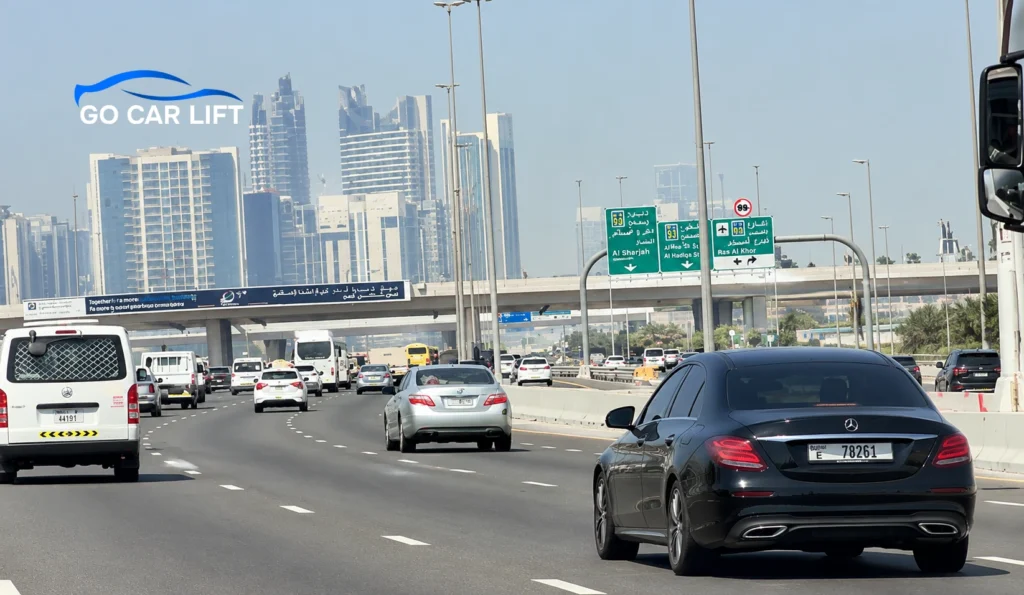
Go Car Lift logo over busy UAE highway traffic for Car Lift Dubai to Abu Dhabi.
Car Lift Guides

Car Lift Dubai to Abu Dhabi: Prices, Plans & Travel Guide

Dubai and Abu Dhabi are about 140 km apart by road, and the journey usually takes around 1.5 to 2 hours. The actual time depends on traffic, your pickup point in Dubai, and where you need to go in Abu Dhabi. For an occasional trip, a bus or taxi may be enough. But if you travel this route several times a week, arranging transport again and again can become tiring. A regular car lift from Dubai to Abu Dhabi can make repeated travel easier with daily, weekly, or monthly options. You can also choose between shared and private rides based on your budget and schedule. Below, we cover pricing, carpool options, monthly plans, travel time, routes, and other ways to travel between Dubai and Abu Dhabi. How Far Is Dubai to Abu Dhabi? Distance & Travel Time The distance between Dubai and Abu Dhabi depends on your exact pickup and drop-off locations, but most trips fall within this general range: The actual journey time can vary a lot depending on where you start in Dubai and your final destination in Abu Dhabi. A pickup from Dubai Marina, for example, will not follow the same timing as a pickup from Deira. Planning your departure time with enough buffer can make the commute much more predictable, especially if you travel this route regularly. Dubai to Abu Dhabi Travel Options Compared There are several ways to travel between Dubai and Abu Dhabi. The right choice depends on your budget, schedule, and how often you travel. Some options are better for occasional trips, while others suit regular commuters. Travel Option Approx. Cost Travel Time Best For Intercity Bus Around AED 25–30 one-way Around 1.5–2+ hours Budget travellers Taxi Around AED 250–300+ Around 1.5–2 hours Occasional direct trips Uber / Careem Varies by demand and vehicle Around 1.5–2 hours App-based private travel Shared Car Lift From AED 80 daily Around 1.5–2 hours Regular commuters Private Car Lift From AED 170 daily Around 1.5–2 hours Families and professionals Own Car Fuel + tolls + parking Around 1.5–2 hours Drivers who want full control Rental Car Rental + fuel + tolls + parking Around 1.5–2 hours Visitors and short-term travellers Private Driver / Transfer Higher private-trip cost Around 1.5–2 hours Business and premium travel A bus is usually the cheapest option, while taxis and ride-hailing services offer more direct travel. Driving gives you more control, but fuel, tolls, parking, and vehicle costs can add up. For regular travel, a shared or private car lift can be easier to manage because you can arrange daily, weekly, or monthly rides instead of booking a new trip each time. For a deeper comparison of all transport choices, see our Dubai to Abu Dhabi: 7 Best Ways to Travel guide. Car Lift Dubai to Abu Dhabi: Daily & Monthly Plans from AED 80 Go Car Lift offers shared and private rides between Dubai and Abu Dhabi for occasional passengers and regular commuters. You can choose a daily, weekly, or monthly plan depending on how often you travel and how much privacy you need. Shared rides are a practical choice for solo commuters who want to keep travel costs lower, while private rides suit passengers who prefer more privacy and flexibility. Weekly and monthly plans are better for people who travel this route regularly and do not want to arrange a new ride every day. Go Car Lift also provides Abu Dhabi to Dubai car lift services with the same daily, weekly, and monthly plan structure. Final pricing can still depend on your exact pickup point, drop-off location, and travel schedule. Daily, Weekly or Monthly Car Lift: Which Plan Is Right for You? The right plan depends on how often you travel between Dubai and Abu Dhabi. A daily ride works for occasional trips, a weekly plan suits short-term regular travel, while a monthly plan is better for commuters who make the journey most working days. Daily Car Lift for Occasional Travel A daily car lift from Dubai to Abu Dhabi works well when you only need the route once or a few times. It gives you more freedom because there is no longer commitment. This option can suit meetings, appointments, airport travel, or changing work schedules. Weekly Car Lift for Short-Term Commuting A weekly plan is useful when you need regular transport for a limited period. It can work well for temporary work assignments, project visits, training, or hybrid schedules where you travel several days in one week. Monthly Car Lift for Regular Commuters A monthly plan is usually the best fit for people travelling between Dubai and Abu Dhabi on most working days. It gives you a more fixed routine, avoids repeated daily bookings, and makes it easier to plan your travel budget for the month. Shared vs Private Car Lift Dubai to Abu Dhabi: Which One Fits You? Both shared and private car lifts can work well for this route. The better option depends on your budget, schedule, and how much flexibility you want during the trip. Shared Car Lift A shared car lift from Dubai to Abu Dhabi lets you travel with other passengers going in the same direction. It usually costs less and works well for solo commuters with regular office timings. Best for: Private Car Lift A private car lift from Dubai to Abu Dhabi gives you the full vehicle for your own booking. It offers more privacy, fewer passenger stops, and more control over pickup and drop-off times. Best for: For regular Dubai to Abu Dhabi commuters, the choice usually comes down to saving more with a shared ride or paying extra for privacy and flexibility with a private ride. Who Uses Our Dubai to Abu Dhabi Car Lift Services? People use car lift services between Dubai and Abu Dhabi for very different reasons. Some travel every working day, while others need a private ride, airport transfer, or a more suitable option for family or business travel. Private Car Lift Dubai to Abu Dhabi

SUV driving on highway past scenic mountains for Car Lift Dubai to Ras Al Khaimah.
Guides, Car Lift Guides

Car Lift Dubai to Ras Al Khaimah: Cost, Time & Booking Guide

The drive between Dubai and Ras Al Khaimah covers roughly 110 to 120 kilometres and usually takes around 1.5 to 2 hours, depending on your exact pickup and drop-off locations. If you are making this journey occasionally, a taxi or bus may be enough. But for people travelling between Dubai and RAK several times a week, a car lift Dubai to Ras Al Khaimah service can be a more practical option. Many passengers are choosing car lift services because they offer a reliable, comfortable, and cost-effective alternative for regular travel between the two emirates. With flexible options available, commuters can choose a solution that fits their schedule, budget, and travel needs. How Far Is Dubai to Ras Al Khaimah? Distance & Travel Time The distance between Dubai and Ras Al Khaimah depends on your exact pickup and drop-off locations, but most routes fall within this range: The actual travel time can vary depending on where you start in Dubai and your final destination in Ras Al Khaimah. Planning your departure time and choosing a reliable transport option can make the journey much smoother, especially for regular commuters. Car Lift Dubai to RAK vs Bus vs Taxi: Cost & Comfort Comparison Choosing the right transport option between Dubai and Ras Al Khaimah depends on how often you travel, your budget, and the level of comfort you need. A bus offers the lowest cost, a taxi provides direct convenience, while a car lift Dubai to Ras Al Khaimah service offers a practical balance for regular commuters. Transport Option Approximate Cost Travel Time Best For RAKTA Bus AED 27–30 one-way Around 2 hours including stops Budget travellers who do not mind fixed schedules and station transfers Taxi AED 200–350 one-way Around 1.5–2 hours Passengers who need a direct private ride for occasional trips Car Lift Dubai to RAK Depends on route and service type Around 1.5–2 hours Regular commuters looking for comfortable and cost-effective travel A bus can be a good choice for occasional journeys when keeping costs low is the main priority. However, fixed timings and station transfers can make it less convenient for people travelling frequently. A taxi provides the most direct experience, but using it regularly can become expensive over time. For daily or weekly commuters, a car lift offers a more balanced option by reducing travel costs while maintaining comfort and reliability. What Does a Dubai to Ras Al Khaimah Car Lift Cost? The cost of a car lift from Dubai to Ras Al Khaimah depends on the type of trip you choose and how often you travel. For passengers making this journey regularly, having a fixed rate and planned schedule makes travel easier without needing to arrange a new ride every time. Dubai to Ras Al Khaimah Car Lift Rates: Weekly and monthly car lift plans are also available for regular commuters who travel between Dubai and Ras Al Khaimah frequently. These plans provide a more convenient option for passengers who need a reliable transport solution without booking each journey separately. If you need a route-specific quote or want to know which plan fits your schedule, contact Go Car Lift and arrange a suitable option for your travel needs. Who Uses Dubai to RAK Car Lift Services? A Dubai to Ras Al Khaimah car lift service is used by different types of regular travellers who need a more practical option than driving alone or booking a taxi every day. Common users include: For people making this journey several times a week, a car lift provides a more convenient routine compared with arranging transport separately for every trip. Shared vs Private Car Lift: Which Option Fits You? Choosing between a shared and private car lift Dubai to Ras Al Khaimah service depends on your budget, schedule, and how much flexibility you need. Shared Car Lift RAK Shared car lift RAK bookings allow you to travel with other passengers heading in the same direction. This option helps reduce the overall cost while still providing a comfortable alternative to driving yourself or booking a taxi. Best suited for: Private Car Lift RAK Private car lift RAK bookings give you the vehicle exclusively, offering more privacy, flexible arrangements, and a more personalised travel experience. Since the ride is not shared with other passengers, the cost is usually higher. Best suited for: For a route as long as Dubai to Ras Al Khaimah, the right choice usually depends on whether saving money or having extra comfort and flexibility matters more for your travel needs. Monthly Car Lift Dubai to RAK: Cost Benefits for Regular Commuters For anyone travelling this route four or five days a week, the monthly math tells a clearer story than a single-trip comparison. A taxi at AED 200 to 350 a day, five days a week, four weeks, runs well past AED 4,000 to 7,000 a month, a genuinely steep number for a daily commute. The bus stays cheapest on paper, but the fixed schedule and lack of door-to-door pickup cost real time twice a day, every day. A monthly car lift plan is built specifically to sit between these two extremes: a fixed monthly rate, agreed upfront, with the same driver and a consistent pickup point, so you’re not booking a fresh ride, checking bus times, or hailing a taxi every single morning. For a route this long, that predictability tends to matter as much as the cost itself once you’re a few weeks into the routine. The section direction is good. It fits the Go Car Lift audience because it supports daily commuters and recurring travel intent. I would only improve readability by adding H3s or bullets because currently it is one long paragraph. Daily, Weekly, or Monthly Plans: Which One Should You Choose? The right plan depends on how often you travel between Dubai and Ras Al Khaimah and how predictable your schedule is. Daily Car Lift Booking A daily booking works well for occasional trips or schedules that change often. You pay per journey

Cars passing under Dubai highway toll gate at sunset: UAE fuel and Salik price guide.
Car Lift Guides

UAE Fuel and Salik Price Hikes in 2026: What It’s Costing Drivers

UAE fuel prices have climbed sharply through 2026, with Special 95 petrol rising from AED 2.33 in February to over AED 3.83 by June, one of several UAE fuel and Salik price hikes in 2026 that have made driving noticeably more expensive. On top of that, Dubai added 5% VAT to every Salik toll crossing and to parking charges starting June 1. For anyone driving a daily commute, this isn’t a small shift. It’s a real, monthly cost increase that shows up whether you notice it or not. What Changed in 2026: Fuel, Salik, and Parking These UAE fuel and Salik price hikes in 2026 trace back to global disruption. After the US-Iran conflict broke out in late February 2026, the Strait of Hormuz, a route that once carried a fifth of the world’s oil and gas trade, saw a naval blockade that pushed energy prices up worldwide. The UAE, now setting its own fuel prices independently after exiting OPEC and OPEC+ in May, passed those increases on to drivers. Prices have moved several times since. Here’s the full progression, from February’s baseline through the latest September 2026 rates: Fuel/Toll Type February 2026 June 2026 September 2026 Special 95 AED 2.33 AED 3.83 AED 3.69 Super 98 AED 2.45 AED 3.95 AED 3.80 E-Plus 91 AED 2.26 AED 3.76 AED 3.61 Diesel AED 2.52 AED 4.33 AED 4.30 Salik (Peak) AED 6.00 AED 6.30 AED 6.30 Salik (Off-Peak) AED 4.00 AED 4.20 AED 4.20 Since February 2026, Special 95 is still up roughly 58% year-to-date, even after easing slightly from June’s peak. Salik’s 5% VAT, added on June 1, 2026, is layered on top of the peak/off-peak pricing structure that’s been in place since January 2025; a driver crossing four peak-hour gates daily is paying roughly AED 26.40 extra a month from the VAT alone, on top of the toll cost itself. Parking operator Parkin added the same 5% VAT to all parking charges from that same date, and cash payments at physical parking meters were phased out entirely in favor of digital payment. The takeaway isn’t one fixed number. It’s that the cost of driving yourself has become noticeably less predictable this year than it used to be. What This Actually Costs a Daily Commuter Take a typical Dubai-Abu Dhabi commuter doing the 140km round trip daily. At September 2026 fuel prices, a standard sedan burns through roughly AED 550-850 a month in fuel alone. Add Salik: four peak crossings a day add around AED 26.40 a month just from the VAT portion, before counting the toll itself, and parking VAT if you’re paying for a spot near the office. What looked like a manageable monthly driving budget back in January has shifted more than once this year, and not always in a way that’s easy to plan around. We broke this down in more detail in our Car Lift vs Driving Your Own Car comparison, worth a read if you want the full monthly math, including insurance and maintenance, not just fuel and tolls. Why a Fixed Fare Matters More Now Than Before Here’s the practical problem with driving yourself in a year like this one: your cost isn’t fixed. It moves every time the Fuel Price Committee makes an announcement, and you find out how much more you’re paying after you’ve already spent it. A car lift’s flat fare doesn’t do that. Whether fuel goes up again next month or drops back down, your quoted price stays the same. You’re not the one absorbing a mid-year fuel spike or a new toll VAT that’s priced in before you ever book. How Go Car Lift Keeps Your Cost Predictable Across our routes, Dubai to Abu Dhabi, Dubai to Ras Al Khaimah, and Sharjah to Fujairah the fare you’re quoted is the fare you pay, regardless of what happens to fuel or toll prices that month. That’s the whole point of a flat rate: it doesn’t move just because the Fuel Price Committee makes a new announcement or Salik adjusts its VAT. What that actually means for you: Book once, and the number you agreed to is the number you pay, not something that shifts with the next price announcement. What Might Change Next Fuel prices in the UAE are reviewed and announced monthly, so it’s realistic to expect more movement, in either direction, as global conditions shift. This page will be updated as new prices are announced, so the numbers above reflect where things stood as of the last update, not a permanent baseline. Conclusion Fuel, tolls, and parking have all gotten more expensive and less predictable in the UAE this year. These UAE fuel and Salik price hikes in 2026 aren’t likely to be the last, and there’s no clear sign the pattern stops here.  If you’re tired of recalculating your commute cost every time a new price comes out, a fixed-fare car lift takes that variability off your plate entirely. Message Go Car Lift on WhatsApp to lock in a rate that stays the same no matter what the next fuel announcement brings. FAQs 1. How much have UAE fuel prices increased in 2026?Special 95 petrol rose from AED 2.26 in February 2026 to AED 3.83 by June, before easing to AED 3.69 by September, still more than 60% higher than February’s rate, driven largely by global disruption following the US-Iran conflict. 2. Is there VAT on Salik tolls now?Yes. Dubai’s Salik toll operator added 5% VAT to every toll crossing starting June 1, 2026. As of September, peak crossings cost AED 6.30 and off-peak crossings cost AED 4.20. 3. How much does daily driving cost with the new prices?A typical Dubai-Abu Dhabi commuter can expect AED 550-850 a month in fuel alone at September 2026 prices, plus around AED 26.40 a month in Salik VAT for four daily peak crossings, before parking costs. 4. Does car lift pricing change if fuel prices go up?No. A car lift’s fare is fixed at booking and doesn’t

Professionals boarding van for commute showing benefits of monthly car lift service.
Car Lift Guides

Benefits of a Monthly Car Lift Service in the UAE

A monthly car lift service gives daily commuters one fixed rate, the same driver most days, and no fresh booking every morning. Plans typically run AED 3,000 to AED 8,000 a cycle, depending on your route and whether you go shared or private. That range exists because this is a premium setup, built around consistency, not the lowest price on the road. If you’re commuting four or five days a week, on any route across the UAE, the real question isn’t whether a monthly plan saves money. It’s whether the consistency is worth paying for. Here’s what you’re actually getting. You Pay One Fixed Rate, Not a Rate That Shifts Book day by day, and your price can move with demand, timing, and who’s available that morning. A monthly plan locks your rate before the cycle starts, and it doesn’t change halfway through. That’s the real value here. Not the cheapest number on the market, the most predictable one. No Booking Stress Every Single Morning Daily booking means checking availability, confirming a driver, and hoping someone’s free. A monthly plan skips all of it. Your ride is already arranged for the whole cycle. You get ready, the car shows up, and that’s it. One less decision competing for your attention before work starts. The Same Driver, Most Days This is what separates a premium monthly plan from a cheap one-off booking. You get the same driver for most of the cycle, not someone new each trip. Your driver learns your pickup spot and your timing. We’ve had commuters say this matters more than the price once they’ve actually used it, explaining your building entrance to a stranger every morning gets old fast. Priority When Demand Is High Between 7 and 9 AM, seats fill up fast on busy routes. Monthly plan holders aren’t competing for a last-minute spot during that window, since their seat is already set. On a longer intercity route especially, missing your ride doesn’t mean a short wait. It can mean an expensive last-minute alternative or being late. Less Wear on Your Own Car Skip the daily drive yourself, and your fuel, tolls, and mileage all drop. Tyres last longer. Servicing happens less often. Add that up over a year, and it’s usually more than people expect once it’s actually totalled up. Good for Companies Managing Staff Transport Businesses running this for a team get a transport cost they can budget for, instead of guessing at daily totals. Staff shows up on time more consistently, and HR gets one predictable line item instead of many unpredictable ones. Ask about a group rate if you’re booking for more than one person, it usually works out better than separate individual plans. Peace of Mind for the Whole Cycle There’s a quiet stress that comes with daily transport uncertainty. Will a driver be free? Will the price change today? A monthly plan removes that for the entire cycle in one booking. That’s worth something beyond the number on the invoice. Who Can Benefit from a Monthly Car Lift Plan A monthly plan isn’t built for one type of commuter. It fits anyone doing the same route often enough that a fixed routine actually saves time, not just money. Different reasons, same core benefit: you’re not arranging a new ride every single day. If any of these sound like your routine, a monthly plan is worth checking against what you’re currently paying. Is a Monthly Plan Right for You? It makes sense if you’re commuting four or five days a week and want a fixed cost with a consistent driver. It’s not the right fit if your schedule changes constantly, or you’re only making the trip occasionally; a daily or weekly booking gives more flexibility without paying for days you won’t use. Where to Get a Monthly Car Lift Plan A few providers run monthly car lift plans across Dubai, Abu Dhabi, and the wider UAE. What to check before picking one: is the driver consistent, is the rate actually fixed for the full cycle, and is the company RTA-approved? Go Car Lift runs monthly plans from AED 3,000, with the same driver for most of the cycle and RTA-approved vehicles. Shared and private options are both available, and the rate stays fixed for the full 4-week cycle once confirmed. Ready to Set Up Your Plan? WhatsApp your route and how many days a week you’re commuting, and we’ll confirm a rate that fits your schedule. [Book on WhatsApp] FAQs 1. What’s the benefit of a monthly car lift over daily booking?A fixed rate, the same driver most days, and no booking every morning. One payment covers the whole cycle. 2. How much does a monthly car lift service cost?Shared plans typically run AED 3,000 to AED 4,500 a cycle. Private plans run AED 6,000 to AED 8,000, depending on route and setup. 3. Will I get the same driver every day?Mostly, yes. Occasional changes happen, but most riders keep the same driver for most of the cycle. 4. Is a monthly plan good for companies with staff commuting daily?Yes. It gives a predictable transport cost and tends to improve punctuality compared to ad-hoc daily bookings. 5. Is it worth it if I only travel a few times a month?Not usually. It’s built for commuters doing four or five days a week. Below that, daily or weekly booking is the better fit.

Silver sedan driving on highway with skyline view for Car Lift Services in Dubai.
Car Lift Guides

Reliable Car Lift Services in Dubai: Safe & Trusted for Daily Rides

Getting between Dubai and the rest of the UAE every day shouldn’t mean rebooking a taxi, fighting traffic yourself, or hoping a random ride shows up on time. That’s the gap that car lift services in Dubai actually fill. A car lift is a shared or private ride, arranged in advance, with a driver, a fixed fare car lift arrangement, and a schedule that runs the same way every day, not something you’re negotiating fresh each morning. Commuters, students, and daily office workers use this kind of Dubai car lift service for one simple reason: it beats the unpredictability of a taxi and the hassle of driving yourself, especially on routes travelled five days a week. A daily car lift Dubai commute means the same driver, the same pickup point, and no fresh booking every single morning. This page covers what to actually look for in car lift services in Dubai, how our plans work, where we operate, and how to book. What Actually Makes a Car Lift Service Reliable Not every provider offering a passenger car lift service holds itself to the same standard, so it’s worth knowing what actually separates a properly run one from a rough one before you commit to any regular arrangement. The best way to judge car lift services in Dubai isn’t by marketing language; it’s by whether these basics are actually in place: These aren’t luxury extras. They’re the basics a genuinely dependable service handles as standard. Shared vs Private: Which One Fits You The two main ride types work differently, and picking the right one depends on your budget and how much you value having the car to yourself. A shared car lift in Dubai booking splits the vehicle with other passengers heading the same way. A private car lift Dubai ride means the whole car is yours, with no shared stops. Shared Car Lift Private Car Lift Lower cost More privacy Shared route with other passengers Flexible, personal schedule Good for regular commuters watching the budget Good for individuals or families If privacy and a fully flexible schedule matter more to you, our Private Car Lift service page covers that option in full detail. Daily, Weekly, and Monthly Plans Every one of our car lift services in Dubai runs on the same three tiers, so you pick based on how often you’re actually travelling, not a one-size-fits-all package. Daily Plan Best for occasional trips or a schedule that changes often. You book as you go, with no ongoing commitment. Weekly Plan A good fit for short-term commuting needs, a temporary work assignment, or a few weeks of regular travel, without locking into a full month. Monthly Plan For professionals and students who travel the same route regularly, a monthly car lift service in Dubai provides a more convenient way to manage daily commuting with a consistent schedule and reliable arrangements. Specialised Car Lift Services We Offer Beyond the standard commute, our car lift services in Dubai extend to a few specific needs that a generic ride doesn’t cover well: Areas Covered by Go Car Lift We’re not limited to one city. Here’s where our car lift service dDubainetwork actually reaches, and what each route is built around. Car Lift Ajman to Dubai  A daily commuting solution for passengers travelling between Ajman and Dubai, with the same fixed-fare, GPS-tracked setup used across every route we run. This corridor sees heavy daily traffic from residents working in Dubai while living in Ajman for more affordable housing. Car Lift Sharjah to Dubai One of our busiest corridors, built for Sharjah residents commuting into Dubai for work, with shared and private options depending on your budget. Timing matters most on this route, since it crosses some of the most congested stretches of road in the UAE during peak hours. Car Lift Dubai to Sharjah The same route in reverse, for anyone commuting out of Dubai toward Sharjah, running on the same fixed schedule in either direction. Whether you’re heading home after work or travelling for a family visit, the setup stays consistent. Car Lift Dubai to Al Ain  A car lift service from Dubai to Al Ain is an option for the longer inland route, with daily, weekly, and monthly plans available for regular travellers. This trip runs longer than most of our other routes, so a private option is often worth considering for comfort on the way. Car Lift Ajman to Ras Al Khaimah Connecting the northern Emirates, this route runs on the same driver-verification and tracking standard as our core Dubai-Abu Dhabi service. Fewer providers cover this specific corridor consistently, which makes a dependable fixed schedule especially useful here. Car Lift Sharjah to Abu Dhabi  A longer route covered with the same consistency, useful for anyone commuting the full stretch between the two emirates. Given the distance involved, planning ahead with a weekly or monthly arrangement tends to work out better than booking single trips repeatedly. Car Lift Sharjah to Fujairah A convenient car lift service from Sharjah to Fujairah for passengers travelling between the two Emirates, suitable for regular commuters and travellers who prefer a planned ride over arranging transport each time. With scheduled pickups and reliable travel arrangements, this route helps make longer-distance daily journeys more manageable. Car Lift Dubai to Abu Dhabi A reliable car lift service from Dubai to Abu Dhabi for passengers travelling between the two cities for work, study, or regular commitments. With planned schedules, shared and private travel options, and consistent route arrangements, it helps daily commuters manage the long-distance journey more comfortably. A Premium Offering at Reliable Rates We provide a premium offering at reliable rates, with flexible daily, weekly, and monthly car lift plans designed around different commuting needs. Whether you travel regularly for work, study, or personal commitments, you can choose a plan that matches your route and schedule. Estimated fares usually vary depending on the distance, travel frequency, and whether you choose shared or private travel. For example, daily car lift

Driver helping student into van for School Car Lift Service in Dubai.
Car Lift Guides

Is Your School Car Lift Service in Dubai Actually Safe?

Most parents don’t think much about their school car lift service once it’s set up. The driver shows up, the child gets to school, and life moves on. But there’s often a quiet worry sitting underneath that routine, a sense that something about the arrangement isn’t quite as buttoned-up as it should be, even if nothing’s actually gone wrong yet. This isn’t about panicking over a single missed detail. It’s about knowing which patterns in a school car lift service in Dubai are worth paying attention to, and what to actually do if you recognise a few of them. 7 Warning Signs Your School Car Lift May Need a Closer Look 1. You’ve never actually seen the driver’s ID or licence. 2. There’s no real-time tracking, just a text message after the ride is done. 3. The driver changes often, with no explanation given. 4. Pickup and drop-off times shift around unpredictably. 5. Nobody answers when you try to reach the provider about a concern. 6. The vehicle that shows up doesn’t match what was described when you booked. 7. The route changes without you being told in advance. None of these alone means something is wrong. But if two or three sound familiar, it’s worth reading further and asking your provider some direct questions. Red Flag: You’ve Never Actually Seen the Driver’s ID or Licence A verified school car lift driver step should be a normal part of onboarding, not something you have to request. If you’ve never been shown a name, photo, and licence confirmation for the person driving your child, that’s a gap worth closing. Any genuine school car lift service should be able to provide this without hesitation, since it’s basic information, not a special favour. Not seeing this information doesn’t automatically mean anything has gone wrong, but it does mean you’re trusting a stranger with your child based on assumption rather than confirmation. Ask for it directly if it hasn’t been offered, and note how quickly and clearly the provider responds. Red Flag: No Real-Time Tracking, Just a Text After the Fact There’s a real difference between a GPS-tracked school ride and a provider that simply messages “arrived safely” once the trip is over. The first lets you actually see where your child is during the journey. The second asks you to trust that everything happened the way it was described, after the fact, with no way to check. If your provider only offers the second, it’s a reasonable thing to ask about upgrading, not necessarily a sign that anything has gone wrong. A properly run school car transport should be able to explain exactly how its tracking works, not just claim that tracking exists. Red Flag: The Driver Changes Constantly With No Explanation Frequent unexplained driver changes can make it harder for parents to know who is responsible for their child’s transportation on any given day and may warrant asking the provider for clearer driver information going forward. A single substitution for illness or a scheduling clash is normal. A pattern of different drivers with no communication about why is a fair thing to raise directly. Red Flag: Pickup and Drop-Off Times Are Unpredictable Some flexibility around traffic is expected; ten or fifteen minutes either side of the usual time isn’t unusual. What’s worth noticing is a pattern where timing swings by thirty minutes or more with no warning, since this can leave a child waiting outside, unsupervised, for longer than feels comfortable. This is one of the more practical school pickup safety red flags to track, simply because it’s easy to log over a couple of weeks and see whether it’s a genuine pattern or a one-off. A reliable school car lift service in Dubai should be able to give you a realistic timing window and stick close to it most days, not just on the good ones. Red Flag: You Can’t Reach Anyone When Something Goes Wrong If a pickup is late, a route seems off, or you simply have a question, you should be able to reach a real person, not just an automated message that goes unanswered for hours. A provider that’s hard to reach when something feels off makes it genuinely difficult to resolve a small issue before it becomes a bigger one. Red Flag: The Vehicle Doesn’t Match What Was Promised If you were told a specific type of vehicle and something different shows up regularly, with no explanation, that’s worth asking about. It might be a simple scheduling substitution; fleets do sometimes need to swap a vehicle in for maintenance or availability reasons. It might also mean the provider isn’t managing its fleet consistently. Either way, a mismatch between what was promised and what actually arrives is worth a direct conversation rather than letting it slide, especially if it happens more than once or twice. Red Flag: The Route Changes Without Telling You A driver taking an unannounced detour or adding an unexpected stop, even a small one, is worth flagging. There may be a reasonable explanation- traffic, a temporary road closure, but you should be told about it, not left to notice it happened after the fact. Consistent, unexplained route changes are one of the less obvious warning signs that unsafe school transport arrangements can involve, since they’re easy to miss if you’re not paying close attention to timing and direction. A provider that communicates route changes as they happen, rather than staying silent, is generally handling this the right way. What to Do If You Recognise These Signs Start by writing down what you’ve noticed, specific dates, times, and what happened, rather than relying on a general feeling that something’s off. Bring these details to your school car lift service directly and ask clear, specific questions rather than a vague “Is everything okay?” If the answers feel evasive or the pattern continues after you’ve raised it, give yourself a real deadline, a week or two, to decide whether to continue or start looking elsewhere.

Carpool Dubai to Abu Dhabi
Car Lift Guides

Carpool Dubai to Abu Dhabi: How It Works, What It Costs, and Is It Worth It?

If you’re travelling this route regularly, a carpool Dubai to Abu Dhabi setup is worth understanding properly before you write it off as “just a shared ride.” Fuel prices, tolls, and traffic all add up fast on this corridor, and carpooling has grown popular here precisely because it splits those costs across a few passengers heading the same way, without giving up a fixed pickup and a set schedule. This guide covers how a carpool service from Dubai to Abu Dhabi actually works, what it costs, when it makes sense as part of your daily commute, and when it genuinely doesn’t. How Shared Carpooling From Dubai to Abu Dhabi Works Booking a carpool ride from Dubai to Abu Dhabi typically follows a simple flow: share your pickup point and destination, choose shared rather than private, and get matched with a driver already running that route with other passengers heading the same way. A shared ride Dubai to Abu Dhabi setup means you’re grouped with people going roughly in your direction, not a random assortment of stops across the whole city. Before the ride, you’re usually given the driver’s name and contact details, along with vehicle information, so you know exactly who’s picking you up and what car to look for. Vehicles used for carpooling are GPS-tracked, which means the ride’s location can be followed from pickup to drop-off, not just confirmed after the fact. What Does Carpooling From Dubai to Abu Dhabi Cost? Pricing varies by provider, but shared rides on this route generally start at around AED 80 a day, with weekly and monthly plans working out cheaper per trip than booking a fresh ride every morning. Private options cost more, since you’re not splitting the ride with other passengers. A few things affect the final carpooling price: whether you’re booking one-way or a return trip, your exact pickup and drop-off points, and whether you’re going daily, weekly, or monthly. Cost of carpooling Dubai to Abu Dhabi comparisons are only useful when you’re comparing like for like, a one-off shared ride against another one-off shared ride, not against a private monthly plan. Carpool Dubai to Abu Dhabi vs Private Car Lift vs Bus vs Driving Yourself Travel Option Typical Cost Privacy Convenience Best For Shared Carpool Lower Shared with other passengers High Daily commuters and cost-conscious travellers Private Car Lift Higher Fully private Very High Families, business travellers, and travellers who value privacy Bus Lowest Shared Moderate Budget-conscious travellers Driving Yourself Variable Fully private Flexible Travellers who need complete control over their schedule and route Each option trades something for something else. The bus is the cheapest but the least flexible. Driving yourself gives full control but means fuel, tolls, and parking are entirely on you. The carpool vs private car lift decision usually comes down to budget versus privacy: cheaper and shared, or pricier and entirely your own space. Is Carpooling From Dubai to Abu Dhabi Safe? This is the question most people actually want answered before anything else. A shared car lift from Dubai to Abu Dhabi arrangement should give you the same basic reassurances regardless of the provider. A few things worth checking with any provider: Whether carpooling is safe largely comes down to whether a provider actually gives you this information upfront or expects you to just trust that it’s handled. What to Expect During the Journey Once you’re picked up, a carpool from Dubai to Abu Dhabi usually means one or two other passengers are already in the car or joining shortly after, all heading roughly the same direction. The route generally runs along Sheikh Zayed Road, the fastest way between the two cities, with minor detours only if another passenger’s drop-off point requires it. Journey time is typically 1.5 to 2 hours, depending on traffic, similar to a private ride, since the shared stops are usually close to the main route rather than far out of the way. Peak-hour travel adds time regardless of which option you choose, so leaving slightly earlier or later than the rush can make a real difference either way. Carpool Etiquette: What Every Passenger Should Know This matters more than people expect, since you’re sharing a small space with strangers for over an hour, most days of the week, if you’re commuting regularly. None of this is complicated, but it’s the difference between a carpool Dubai-to-Abu Dhabi experience that works well every day and one that gets awkward fast. When Carpooling Makes Sense Daily commuters travelling this route for work, students heading between campuses, and anyone doing this trip often enough that the monthly savings genuinely add up. If you’re cost-conscious and don’t mind sharing space with a couple of other passengers, this is usually the most sensible option on the table. When Carpooling Isn’t the Best Choice A carpool Dubai to Abu Dhabi setup isn’t right for everyone. If you need complete privacy for a call or just want the space to yourself, a shared ride isn’t going to give you that. Travelling with a lot of luggage, several suitcases or bulky items, can also make a shared vehicle impractical for everyone involved. An unusual or unpredictable schedule doesn’t suit carpooling well either, since shared routes work best with consistent timing. And if you need an exclusive stop that’s well off the main route, a private option makes more sense than asking other passengers to sit through the detour. Being upfront about this matters more than pretending carpooling suits everyone. It doesn’t, and knowing that before you book saves everyone a bad experience. How the Monthly Savings Actually Add Up A single shared ride looks affordable on its own, but the real value shows up over a month of regular travel. Compare a shared monthly plan against booking a private ride or a taxi for the same number of trips, and the gap becomes obvious fast, often the difference between a manageable monthly cost and one that eats into a real chunk of your salary. Self-driving

is car lift illegal in UAE
Car Lift Guides

Is Car Lift Illegal in UAE?

Car lift illegal in UAE are not illegal when operated through licensed and registered platforms. Apps like Careem, Uber, and other RTA-approved ride-sharing services are fully legal. However, unofficial and unregistered car lifts between private individuals for money are considered illegal and can result in heavy fines. This is one of the most searched questions by UAE residents. Let’s break it down clearly so you know exactly where you stand. The Simple Truth About Car Lifts in the UAE There are two types of car lifts in the UAE. Licensed ones and unlicensed ones. The law doesn’t ban car sharing completely. It bans unregulated, money-based rides from private drivers with no official permit. Think of it like street food vs. a restaurant. One has health checks, licenses, and accountability. The other doesn’t. The UAE treats car lifts the same way. What Makes a Car Lift Legal? A car lift is illegal in the UAE when it meets these conditions: Companies like Uber and Careem tick all these boxes. Their drivers go through background checks. Their cars are registered. Every trip is logged. What Makes a Car Lift Illegal in UAE? An unofficial car lift becomes illegal when a private driver charges money for rides without a transport license. This is called “illegal conveyance” under UAE law. It doesn’t matter if it’s a WhatsApp group, a Facebook post, or a friend-of-a-friend setup. The moment money changes hands without proper licensing, it crosses the legal line. The driver risks a fine of AED 3,000 or more. The vehicle can also be impounded. What About Sharing Fuel Costs? This is where it gets a little grey. Many UAE residents share rides between car lift Dubai to Abu Dhabi and split petrol costs. Technically, splitting fuel costs between genuine friends or colleagues is not the same as charging a fare. But the law looks at intent and regularity. If you’re doing it every day with strangers and collecting money, authorities may treat it as illegal transport. If it’s a genuine cost-split between coworkers, the risk is much lower. The safest route is to always use a licensed app or platform. RTA Rules on Ride Sharing in Dubai The Roads and Transport Authority (RTA) in Dubai regulates all transport services. They have approved specific app-based platforms for ride-sharing and carpooling. Only drivers registered under these platforms can legally offer paid rides. The RTA has cracked down on illegal transport several times. Sting operations have caught unofficial drivers picking up passengers at airports, malls, and bus stations. Fines are steep, and penalties are serious. Is Carpooling Legal in UAE? Yes, carpooling is legal when done correctly. The UAE government actually supports carpooling to reduce traffic and cut emissions. Some companies run internal carpooling programs for employees. The key difference is this. Carpooling means sharing a ride you were already taking. Illegal conveyance means making rides your business without a license. Dubai to Abu Dhabi Car Lifts – What’s the Legal Way? The Dubai to Abu Dhabi pick-up and drop-off is one of the most popular services in the UAE. Thousands of people make this trip daily for work. Many search for cheap car lift options to save money. The legal options for this route include: Avoid random WhatsApp groups offering car lifts for cash. The savings aren’t worth the legal risk on either end. Penalties for Illegal Car Lifts in UAE The UAE takes illegal transport seriously. Here’s what can happen to unlicensed drivers caught offering paid rides: Passengers are generally not penalised. But why take the risk of riding with an unlicensed and uninsured driver? Why People Still Use Unofficial Car Lifts The honest answer is cost. Licensed apps charge more than a WhatsApp driver offering AED 40 from Dubai to Abu Dhabi. For daily commuters, that difference adds up fast. But unlicensed cars carry no insurance for passengers. If an accident happens, you’re on your own. No claim. No compensation. No protection. The cheap ride can turn into a very expensive problem. The Bottom Line Car lift illegal in UAE are legal when done through licensed, RTA-approved platforms. Private drivers collecting cash without permits are breaking the law. Stick to registered apps and services for intercity travel. It keeps you safe, insured, and on the right side of UAE law.